If you run a UK business, you may have seen a headline this week telling you to claim your business in ChatGPT.
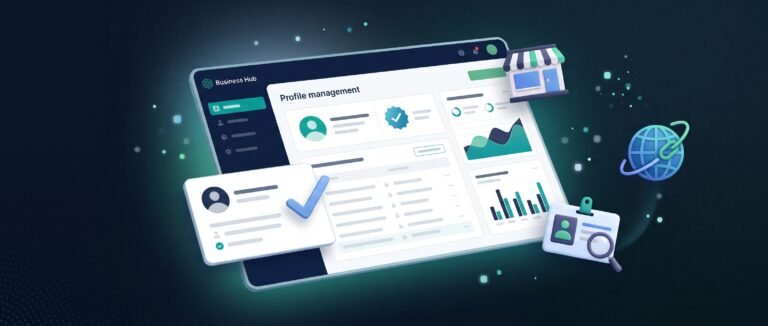
OpenAI launched Businesses in ChatGPT in beta on 10 November 2026. It has two parts. Business Hub is where eligible businesses claim a profile, manage their information and see insights on how people engage with them. Business Agents are labelled AI chats a business builds from its own information, and for now they’re limited to eligible US ecommerce and online service businesses.
For a UK business it’s narrower than the headlines suggest. OpenAI’s help article on setting up your business says local stores and restaurants can currently claim only an existing US listing.
OpenAI says 1.2 billion people use ChatGPT each week, so I can see why people want to know where they stand. I’ve gone through OpenAI’s announcement, help pages and policies to work out what a UK business can do today, what claiming changes and what can wait.
What a UK business can do in ChatGPT today
OpenAI says any eligible business located where ChatGPT is available can claim it through Business Hub, but availability depends on the business’s location and type. Local stores and restaurants can currently claim only an existing US listing, an eligible online business may see an option to add one, and Business Agents are US-only.
| What launched | What it does | Who can use it today (per OpenAI) |
|---|---|---|
| Business Hub claiming | Claim or add a listing, then manage it | Eligible businesses where ChatGPT is available, depending on location and type. Local stores and restaurants: existing US listings only |
| Business information | Update your website, description, category, logo, and delivery and returns policy | Claimed businesses that pass identity verification. OpenAI reviews changes first |
| Product feeds | Upload a CSV or link a hosted feed of your products | Claimed businesses, but the standard upload currently targets the US |
| Insights | 28 days of mentions, website clicks and discovery topics | Claimed, verified businesses, once activity passes reporting thresholds |
| Business Agents | A labelled AI chat built on information the business provides | Eligible US ecommerce and online service businesses |
| Sponsored agents | An agent used as the destination for a ChatGPT ad | Businesses with an agent. OpenAI’s September post said select US advertisers |
Local shops, cafes and restaurants are the clearest case. The help article says “Local stores and restaurants can currently claim only an existing U.S. listing.” As I read that, a UK high street business can’t claim yet.
Online businesses have more of a chance. OpenAI says “If you run an eligible online business, you may see an option to add it.” That’s a “may”, and OpenAI doesn’t say whether a UK online business gets the same option as a US one.
Service businesses with no shopfront (a bookkeeper working from home, say) sit in a grey area. OpenAI doesn’t say where they fall, though its landing page says claiming “is initially available to eligible businesses with a website.”
If you sell through Shopify, you can connect the store from Business Hub or the Shopify admin. OpenAI Support can’t manage your Shopify admin or catalogue settings, so that side stays with you and Shopify.
None of the OpenAI pages I read mention the UK by name, and nor does its launch video. So whether a UK business gets through probably depends on which flow Business Hub offers it.
It’s also a beta. OpenAI’s Businesses in ChatGPT policy says it may decline claims where a business’s offerings raise “significant safety or integrity concerns”, and that “Eligibility requirements may change over time.” So I’d read the table above as where things stood in November 2026, and check again before acting on it.
Claiming, ID checks and the blue check
Claiming a business in ChatGPT doesn’t need an Ads account or a ChatGPT Enterprise agreement, according to OpenAI. Publishing changes, connecting a product feed, viewing insights or creating an agent all need Persona identity verification, though, which may ask for government-issued ID, business registration information and proof you’re authorised to represent the business.
The claim itself is verified by phone, business email, website domain or Shopify, using whichever of those Business Hub offers you. Persona is a separate check that comes after it.
Edits aren’t instant. OpenAI reviews changes before publishing them, and says updates “can take time to appear in a listing or a ChatGPT answer. ChatGPT may also use other sources when answering questions about your business.”
OpenAI’s own pages disagree on the blue check. The landing page FAQ says a blue check appears on the profile “to show it’s been claimed”. The help article says claiming alone doesn’t give the profile a verified badge, and that the blue check appears after Persona approval.
The help article is the more detailed of the two and was updated on 10 November, so I’d go by that for now. If you’ve claimed and there’s no tick yet, Persona is the first thing I’d look at.
The policy also asks you to manage only businesses you represent and to keep the information accurate. If someone else set up the email address on your website domain, check you can receive messages at it before you start.
How the Business Hub insights are counted
Business Hub insights cover the past 28 days and show mentions, website clicks and discovery topics. OpenAI counts a mention differently for online and local businesses, and neither version means someone visited your site. The insights only appear once your claim and Persona verification are approved, and only when activity passes a reporting threshold.
| Metric | How OpenAI counts it | What it doesn’t tell you |
|---|---|---|
| Mentions (online business) | ChatGPT references the business’s website. “The brand name alone doesn’t count.” | Whether anyone read the answer or visited |
| Mentions (local business) | ChatGPT “shows a result for that location, even if the customer doesn’t open the listing or visit the website” | Whether anyone looked at the result |
| Website clicks | “how often people click through to your website” | What people did once they arrived |
| Discovery topics | Common themes in answers that mentioned or cited the business | They “don’t reveal individual prompts or directly measure customer intent” |
OpenAI says it doesn’t share users’ conversations or Business Agent chats with businesses, and it doesn’t publish what the reporting threshold is.
So expect gaps. The help article says a blank metric “can mean activity hasn’t reached the reporting threshold, data is still being collected, or reporting is unavailable. It doesn’t necessarily mean zero activity.”
My view is that a mention is much closer to a Search Console impression than a click. You wouldn’t judge a page on impressions alone, and I’d read mentions with the same caution.
Website clicks in Business Hub are OpenAI’s count. What arrives on your site and shows up in GA4 is a separate measurement, and I wouldn’t expect the two to match exactly.
Business Agents and sponsored agents are US-only for now
Business Agents are available to eligible ecommerce and online service businesses in the United States, so a UK business can’t publish one yet. A Business Agent is a labelled AI chat built on information the business provides. Businesses can sponsor their agent as the destination for ChatGPT Ads, which means sponsorship also depends on having an agent.
OpenAI’s help article says the current version lets an agent explain products and policies and link to your website, where customers complete those actions. Asked whether an agent can complete purchases, make bookings or check a customer’s order, OpenAI’s answer is no.
To publish one, a business needs a website and has to meet the industry requirements in OpenAI’s Business Agents Policy. The agent must be clear that it’s AI representing the business, and the business can’t set it up to pressure people or guarantee results. The policy also says “Business verification alone does not guarantee agent eligibility”, so passing Persona doesn’t automatically get you an agent.
OpenAI says it plans to expand agents to more markets and categories over time. It hasn’t given dates.
OpenAI’s two posts describe sponsored agents differently. The 10 November announcement says businesses can sponsor their agent and use it as the destination for ChatGPT Ads, and that “Sponsored placements are clearly labeled and separate from ChatGPT responses.” OpenAI’s advertising post of 16 September 2026 said Sponsored Agents were “being tested with select advertisers in the United States.”
The November wording reads wider than the September one. OpenAI hasn’t said how widely sponsorship is open now, and I’m not going to guess.
Claiming, publishing an agent and advertising are separate things. OpenAI also says “Advertising doesn’t influence ChatGPT’s independent answers.” That’s OpenAI’s statement, and I’ve no way of testing it from the outside.
If you’re a UK business and someone is quoting you to build a ChatGPT agent or run sponsored agents, I’d decline it until OpenAI opens agents here.
What it means for a small business in the UK
For most UK small businesses, Businesses in ChatGPT is something to check this week. Spending money on it can wait. OpenAI’s landing page says “Claiming does not guarantee higher placement or sales”, and its help article says claiming “doesn’t guarantee increased visibility or give you direct control over ChatGPT’s independent recommendations.”
Picture a gift shop in a market town with a Shopify store alongside it, wondering whether this deserves an afternoon. The shop can’t be claimed yet. The online store might be, depending on what Business Hub offers, and claiming it would let the owner keep the information they give ChatGPT accurate. OpenAI doesn’t offer it as anything more.
ChatGPT may use other sources when answering about your business, so my view is that your website and what’s said about you elsewhere still matter, whether or not you can claim. I’ve written about how ChatGPT decides which businesses to recommend, including what’s documented and what isn’t. OpenAI hasn’t published how a claimed profile is weighed against those other sources.
It’s tempting to compare all this with Google Business Profile. OpenAI doesn’t make that comparison, and a UK local business can’t claim its premises in ChatGPT yet anyway. I wouldn’t carry Google’s advice across to ChatGPT, or assume the two work the same way.
Then there’s measurement. To see ChatGPT visits and what those people did on your site, you need GA4, and I’ve covered how to track traffic from ChatGPT in GA4. Check how ChatGPT visits actually show up in your own GA4 before relying on any one setup. The number that matters is the enquiries and sales those visits produce, with mention counts a long way second.
Retailers and multi-site businesses have a couple of extra limits. OpenAI’s product feed specification says “The standard OpenAI-format upload currently targets the US”, and adding row-level market columns doesn’t change that, so a UK feed isn’t a quick win today. If you have several locations or brands, there’s no central management yet, and claiming the main brand doesn’t claim its locations.
What can wait: agents, sponsored agents, and any paid service selling you a “ChatGPT profile”.
What I’d Do
What I’d do about Businesses in ChatGPT depends mostly on whether you sell online or from premises. Either way, I’d start by saving what ChatGPT says about you now, because that’s the only way to tell later whether claiming or editing a profile changed anything. Online businesses can then try Business Hub; local ones wait.
It isn’t a fixed programme, and the order changes if something more basic is broken on your site. For most small businesses I’d go roughly like this:
- Ask ChatGPT about your business the way a customer would, and save the answer with the prompt and the month. Without that, you can’t tell whether anything you change makes a difference.
- If you’re an online business, sign in to Business Hub and see whether it offers you a listing to claim or add. If it does, I’ve written up how to claim your business in ChatGPT, step by step.
- If you’re a local shop, cafe or restaurant, don’t chase it yet. Check OpenAI’s help article again in a few weeks, and go by that over any third-party post saying it’s open in the UK.
- Make sure your own website states the facts you’d put in a profile: what you do, your category, delivery and returns, and how to contact you. ChatGPT may use other sources when it answers about you, and my view is your own site is the one you control.
- Check how ChatGPT visits show up in your GA4, using the guide in the section above.
- If you do claim and the insights are blank, don’t read that as zero. OpenAI says blank doesn’t necessarily mean no activity.
If you’d rather I checked how ChatGPT describes your business and what’s worth fixing, that’s what my ChatGPT visibility work covers.
FAQ
Can UK businesses claim their business in ChatGPT?
It depends on the type of business. OpenAI says any eligible business located where ChatGPT is available can claim through Business Hub, but availability depends on location and type. Local stores and restaurants can currently claim only an existing US listing. An eligible online business may see an option to add one.
What is ChatGPT Business Hub?
ChatGPT Business Hub is where a business claims its profile in ChatGPT, updates details such as its website, description, category and returns policy, connects a product feed and sees insights. The insights cover the past 28 days and show mentions, website clicks and discovery topics, once identity verification is complete.
Will claiming my business make ChatGPT recommend it more?
OpenAI says claiming doesn’t guarantee higher placement or sales, and that ChatGPT continues to make independent recommendations. Claiming lets you manage the information you provide. ChatGPT may still use other sources when answering about your business, and OpenAI says advertising doesn’t influence its independent answers.
Do I need to pay for ChatGPT ads or build an agent to be listed?
No. OpenAI says claiming a business, publishing a Business Agent and advertising are separate, and you don’t need an Ads account or a ChatGPT Enterprise agreement to claim an eligible business. ChatGPT may show information about a business whether or not it has an agent. Agents are currently US-only anyway.
Are ChatGPT Business Agents available in the UK?
No. OpenAI says Business Agents are available to eligible ecommerce and online service businesses in the United States. It plans to expand to more markets and categories over time but hasn’t given dates. An agent can explain products and link to your website, but it can’t complete purchases or make bookings.
Does a mention in Business Hub mean someone visited my website?
No. For an online business, a mention counts when ChatGPT references your website. For a local business, it counts when ChatGPT shows that location, even if nobody opens the listing or visits the site. Website clicks are reported separately, and the insights section above has the full breakdown.
Sources
- Introducing Businesses in ChatGPT, OpenAI, published 10 November 2026, accessed 11 November 2026. Supports: beta launch, 1.2 billion weekly users, who can claim, aggregated insights, US-only agents, sponsored agents.
- Setting up your business on ChatGPT, OpenAI Help Center, updated 10 November 2026, accessed 11 November 2026. Supports: US-only local listings, verification, Persona and the blue check, insight definitions, what agents can’t do, no Ads account or Enterprise agreement needed.
- Businesses in ChatGPT (landing page and FAQ), OpenAI, accessed 11 November 2026. Supports: no guaranteed placement, blue check wording, businesses with a website, showing with or without an agent.
- Businesses in ChatGPT policy, OpenAI, accessed 11 November 2026. Supports: declined claims, changing eligibility, representation and accuracy duties.
- Business Agents Policy, OpenAI, accessed 11 November 2026. Supports: agent conduct rules, verification not guaranteeing eligibility.
- Reimagining advertising with AI, OpenAI, published 16 September 2026, accessed 11 November 2026. Supports: Sponsored Agents tested with select US advertisers.
- Products, Agentic Commerce product feed specification, OpenAI Developers, accessed 11 November 2026. Supports: standard feed upload currently targets the US.
- Shopping from Shopify merchants in ChatGPT, OpenAI Help Center, updated 20 October 2026, accessed 11 November 2026. Supports: OpenAI Support can’t manage Shopify settings.
- Introducing Businesses in ChatGPT in beta, OpenAI (YouTube), published 10 November 2026, accessed 11 November 2026. Supports: launch scope, no UK-specific wording.